


The problem is not "selling rooms"—it is operational control
You are not "selling rooms"—you are managing inventory, experience, and reputation. Hospitality complexity comes from multi-channel distribution plus multi-step service delivery. Typical pain points include:
- Fragmented channels distort availability and pricing. OTAs, group-buy platforms, local-service platforms, corporate deals, and direct booking sell in parallel. Slow sync creates overbooking; inconsistent pricing creates complaints or missed revenue.
- Revenue management is experience-driven and slow to iterate. Pricing, minimum stay rules, advance purchase discounts, and cancellation policies require frequent tuning, but small teams cannot adjust fast enough.
- Front desk / guest support lacks coverage; changes are inefficient. Rescheduling, add-ons, early check-in/late check-out, refunds, and disputes consume time. Cross-timezone inquiries reduce conversion and increase review risk.
- Housekeeping and maintenance coordination is weak. The chain from check-out → cleaning → inspection → ready-for-sale breaks easily, causing unavailable rooms, missed cleaning items, and facility failures.
- Slow review handling hurts ratings and exposure. Once negative reviews accumulate, platform exposure drops quickly—yet root causes are rarely traced back to a specific room, shift, or process step.
- Weak retention and membership increases platform dependence. Without segmentation and repeat-touch campaigns, customer acquisition cost rises and resilience falls.
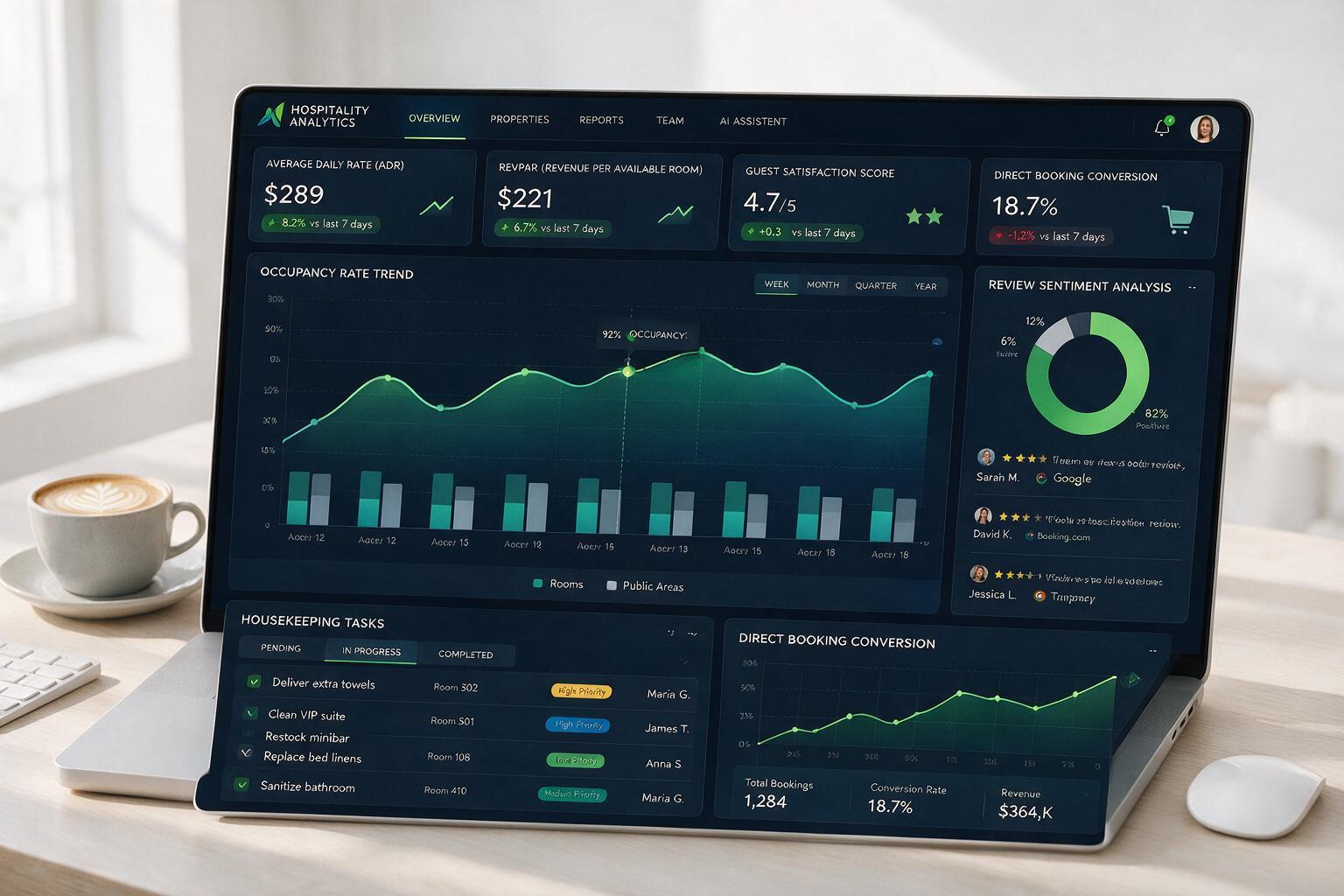
The GT6-AI approach: turn hospitality into a "channel → booking → delivery → reputation → repeat" system
GT6-AI is not just another PMS or channel manager—it is an Organizational Intelligence (OI) platform that runs your property like a well-staffed company. The solution builds an executable and auditable loop through three layers:
Enterprise Operations Back Office (the skeleton). Unified rooms/room types, availability states, pricing rules, channel mappings, orders, guest profiles, stay policies, deposits/refunds, housekeeping & maintenance, SOPs, permissions/approvals, and finance reporting. One single source of truth for the entire property.
Messaging Collaboration Foundation (the nervous system). Order changes, housekeeping handoffs, maintenance tickets, complaints, and resolution logs become a searchable fact stream across WhatsApp, email, and in-app messages—so nothing is lost in a private chat or a shift handover.
Role-based AI Employees (the executors). AI Channel Ops, AI Revenue Manager, AI Front Desk/Guest Support, AI Housekeeping Dispatcher, AI Maintenance Coordinator, AI Reputation Ops, and AI Retention/Finance Analysts work around the clock without shifts, vacations, or overtime.
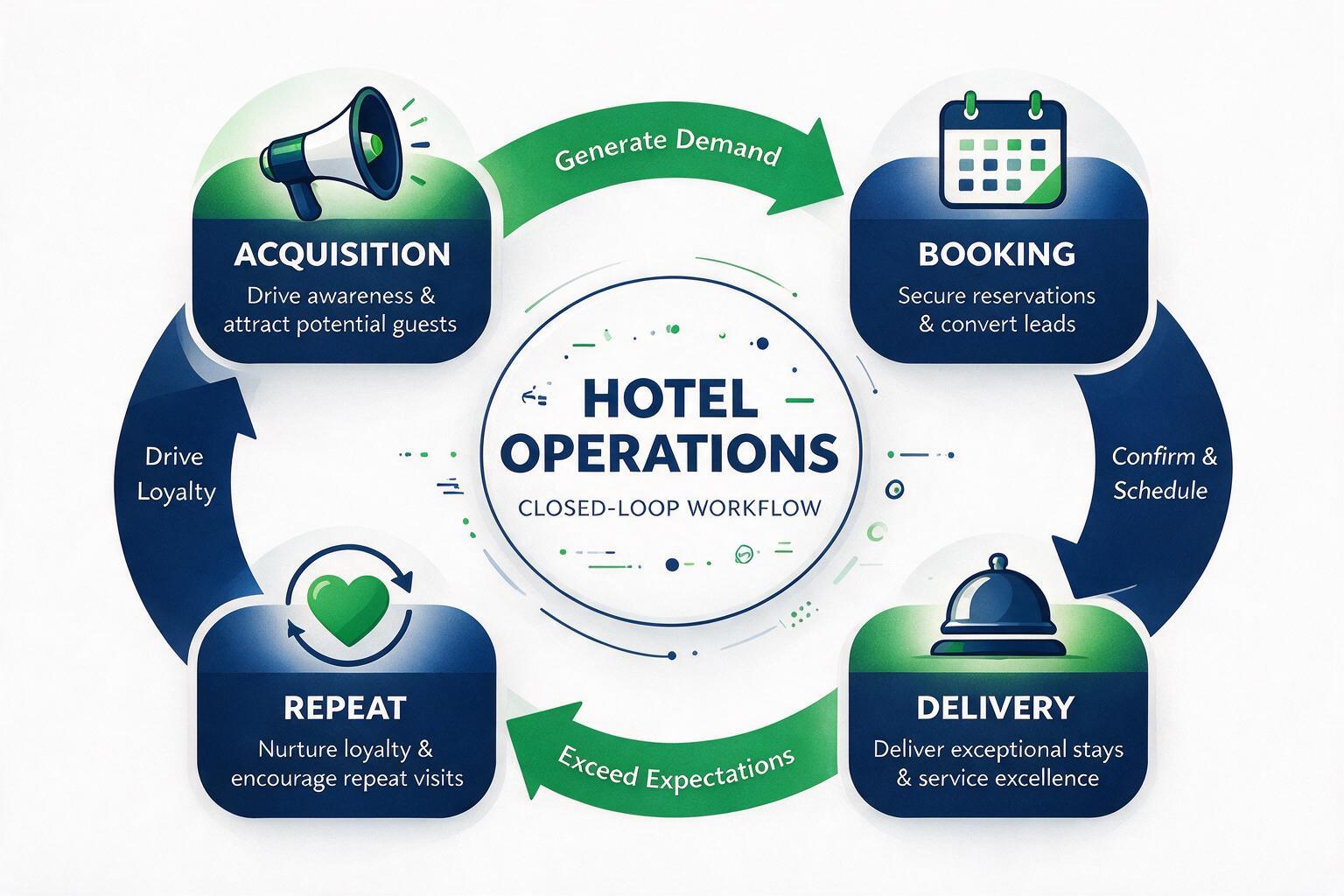
How each link of the loop is operationalized
1) Channel & Acquisition — fill the funnel without discounting blindly
- AI Lead Collector aggregates inquiries from OTAs, local platforms, corporate accounts, and your direct mini-program/website into one pipeline, qualifies them, and routes each lead to the right follow-up channel.
- Marketing Email / WhatsApp Robots push seasonal packages, weekend deals, and upsells (early check-in, breakfast bundles, airport pickup) to segmented audiences automatically—no manual blast, no missed guest.
- Web Posting Robot keeps direct channels updated with real-time availability and pricing, so every channel tells the same story.
2) Booking & Conversion — consistent availability, consistent answers
- AI Front Desk/Guest Support handles high-frequency inquiries 24/7: availability, rules, add-ons, parking/pets, directions, nearby recommendations, invoices, and deposits.
- Change requests (reschedule, early/late, refunds) are validated against rules and routed for approval when needed; VIP, long-stay, and corporate cases are flagged for human escalation.
- Overbooking risk rules detect the combined impact of cleaning delays, maintenance locks, and reschedules—and suggest resolution options (swap, upgrade, or negotiate dates) before a guest is ever turned away.
3) Delivery & Fulfillment — lock stability into the process
- Turn check-out → cleaning → inspection → ready-for-sale into a ticket chain: check-out triggers a cleaning ticket with SLA; cleaning completion triggers an inspection checklist; issues create a maintenance ticket and lock the room; statuses write back to availability to determine sellability.
- AI Housekeeping Dispatcher prioritizes rooms with imminent check-ins and higher-value room types, reducing idle inventory and complaint risk.
- AI Maintenance Coordinator routes facility failures to the right vendor/team with photos, history, and SLA tracking.
4) Reputation & Repeat — make reviews controllable, make guests an asset
- AI Reputation Ops classifies negative reviews by root cause (cleanliness, noise, facilities, service, communication, expectation gap), generates responses and remediation, and writes root causes back to room/shift/process nodes as corrective tasks. Positive reviews are reused as marketing assets.
- For retention, build direct-touch channels (SMS/WhatsApp/email/mini-program), segment guests (new, repeat, long-stay, corporate, dormant), and push relevant offers to increase direct bookings and repeat rate.
- AI Finance Analyst tracks RevPAR, ADR, occupancy, commission leakage, and unit economics per channel, so pricing and channel-mix decisions are based on facts rather than gut feel.
Implementation path: fix availability first, then standardize delivery, then grow reputation and revenue
Phase A — Single source of truth for availability (fix overbooking first). Define a strict availability state model per room/room type: available, reserved, occupied, cleaning, inspection, maintenance lock, out-of-service. Map platform SKUs to internal room types and centralize all orders into one back office. Availability changes automatically sync to channels and trigger alerts.
Phase B — Role-ized revenue management (pricing becomes strategy, not gut feel). AI Revenue Manager proposes price recommendations based on historical occupancy curves, lead-time patterns, holidays/events, and competitor ranges: base price bands and thresholds; minimum stay, advance purchase discounts, non-refundable rules; channel price gaps and net revenue after commissions. High-impact adjustments route through approval gates to prevent costly mistakes.
Phase C — Front desk and guest support workflows (consistent, cross-timezone coverage). AI Front Desk handles high-frequency inquiries and change requests with rule validation, approval routing, and human escalation for key accounts.
Phase D — Housekeeping & maintenance as tickets (lock stability into process). The ticket chain from check-out to ready-for-sale, with SLAs, inspection checklists, maintenance locks, and availability write-backs.
Phase E — Reputation loop and repeat business (make reviews controllable; make guests an asset). Root-cause classification, remediation tasks, direct-touch channels, guest segmentation, and AI-driven retention offers.
Typical outcomes: less overbooking, steadier ratings, higher revenue, lower staffing pressure
- More consistent availability and operations; overbooking and idle rooms reduced.
- Faster housekeeping and maintenance turnaround; guest experience stabilized.
- Better guest support with a consistent tone of voice; change/refund handling more efficient.
- Reviews traceable and remediable; ratings more controllable.
- Strategic pricing and policy tuning; no missed revenue in peak season, no panic pricing in low season.
- Stronger direct repeat and resilience against platform volatility.
Ready to turn your property into a lean, AI-staffed operation? Contact GT6-AI to request a solution walkthrough and a pilot plan tailored to your hotel, homestay, or serviced apartment.