


The problem isn't cooking — it's operational control
A single restaurant is a high-frequency, high-constraint micro supply chain and service system. The owner is simultaneously a forecaster, purchaser, quality inspector, scheduler, complaint handler and marketer. In practice:
- Prep is guesswork. Weather, holidays, platform promotions and neighborhood events swing demand. Over-prep spoils; under-prep stockouts.
- Taste drifts. Recipes live in the chef's memory; training gaps turn into inconsistent output and bad reviews.
- Delivery platforms eat the margin. Missing items, ignored notes, late handoffs and packaging damage trigger refunds, disputes and lower exposure.
- Procurement is opaque. Price swings, ad-hoc purchases and inaccurate stock records hide margin erosion.
- Nobody owns the repeat customer. Without a structured membership operation, traffic is rented, not owned.
Single-store operators don't need more software modules. They need an operating system that turns every link of the store into an executable, auditable, improvable loop — powered by GT6-AI Organizational Intelligence.
GT6-AI: the operating system for a single store
GT6-AI is an organizational intelligence platform built on three layers:
- Enterprise Operations Back Office (the skeleton): standardize menu and recipes, ingredient BOM, inventory and procurement, supplier, pricing, scheduling, orders and refunds, KPIs, permissions and approvals — one source of truth for the whole store.
- Messaging Collaboration Foundation (the nervous system): every order exception, stock alert, prep instruction, review and resolution action is captured as a searchable fact stream, so nothing is lost in verbal handoffs.
- Role-based AI Employees (the executors): AI Store Manager, AI Prep Forecaster, AI Procurement, AI Quality Check, AI Delivery Ops, AI CS/Review Handler and AI Finance Analyst work the store's SOPs around the clock.
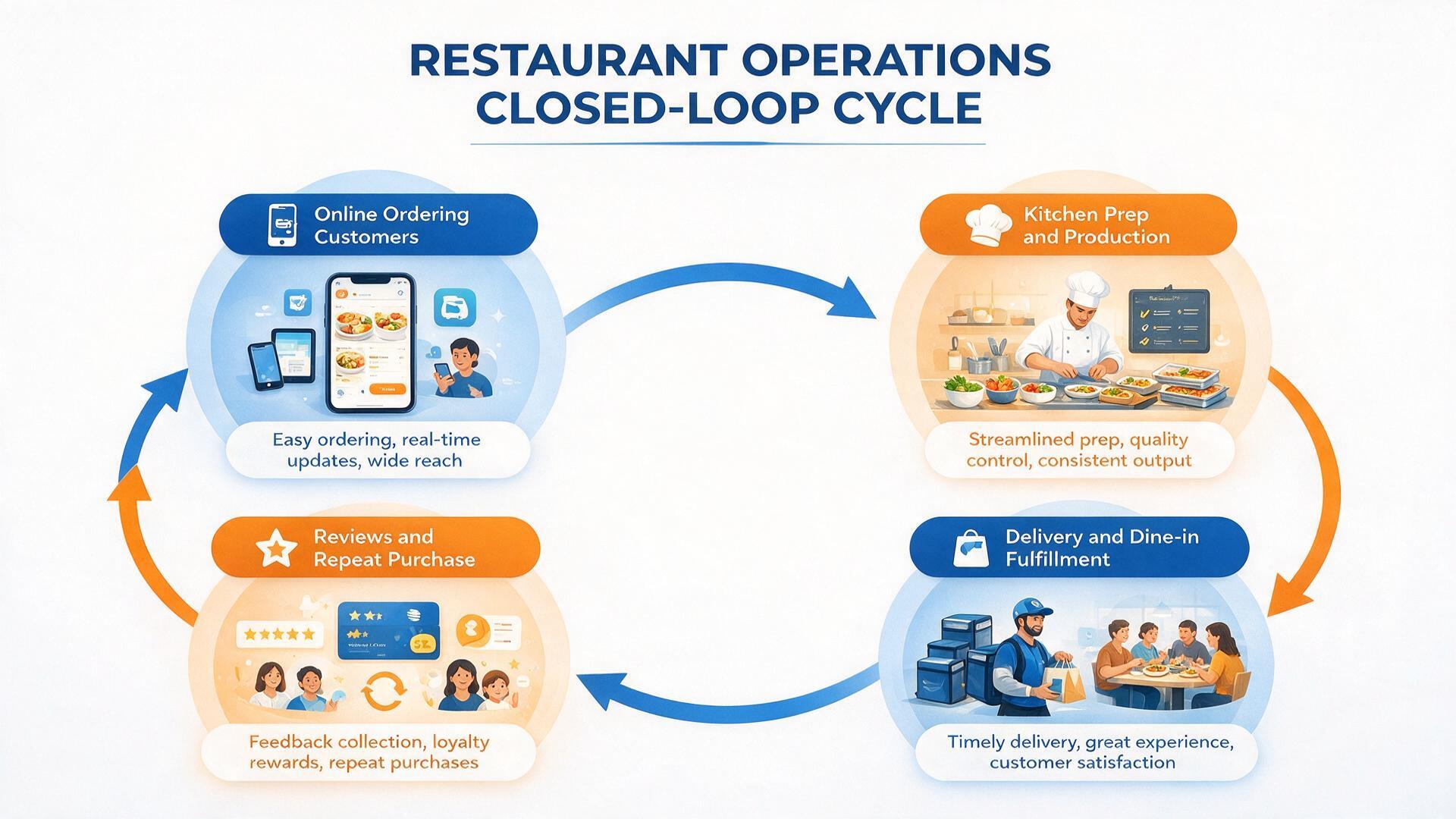
Closed loop: ordering → prep → fulfillment → reputation → repeat
1) Ordering & conversion — every channel becomes a controlled order
- AI consolidates dine-in, takeaway and delivery-platform orders into one queue with unified item codes and modifiers, eliminating manual re-entry and missed notes.
- AI CS answers common questions (where is my order, change address, add cutlery, refund progress) instantly with standard language, freeing staff from interruptions.
- Order exceptions (out-of-stock item, wrong price) trigger rule-based approvals before they reach the kitchen.
2) Prep & production — output that doesn't drift
- Each menu item has a standard spec card: recipe, grams, steps, target time, allergen notes, substitutions, plating and packaging rules. Key quality points become checklists for training and daily sampling.
- AI Prep Forecaster predicts next-day/week demand from history, weekday, weather and promotions, and outputs prep quantities per station.
- AI Quality Check correlates reviews and feedback with process steps, suggesting the most likely station or step to fix.
3) Fulfillment & delivery — exceptions as tickets, not arguments
- Delivery is decomposed into accept → prep → pack-check → handoff → delivery, each with SOP and evidence (receipt, pack-check record, timestamps, rider handoff time).
- Any exception auto-generates a ticket with evidence attached; Delivery Ops AI drafts platform dispute materials and standardized replies.
- High-risk refunds escalate to manager approval; root-cause classification feeds back into prep and packaging SOPs.
4) Reputation & repeat — turn traffic into an owned asset
- Review AI classifies negative reviews by root cause (taste, portion, speed, service, packaging), generates remedy scripts and corrective tasks, and reuses positive reviews as marketing assets.
- Membership operations set up points, coupons, bundles and repeat reminders. AI segments customers (new, silent, frequent, high AOV) and pushes relevant offers and new-item trials — a rating → repeat → referral growth loop.
Implementation path: fix input first, then process, then growth
- Phase A — Menu & recipe standard library: stabilize output before anything else.
- Phase B — BOM + inventory ledger: control waste and stockouts with AI forecasting and procurement.
- Phase C — Delivery fulfillment and exceptions as tickets: make refunds and reviews controllable.
- Phase D — Scheduling & labor efficiency: AI shift recommendations by demand and skill matrix; dashboards track orders per labor-hour, prep time, on-time delivery and bottlenecks.
- Phase E — Reputation & membership: turn reviews into fixes and traffic into repeat revenue.
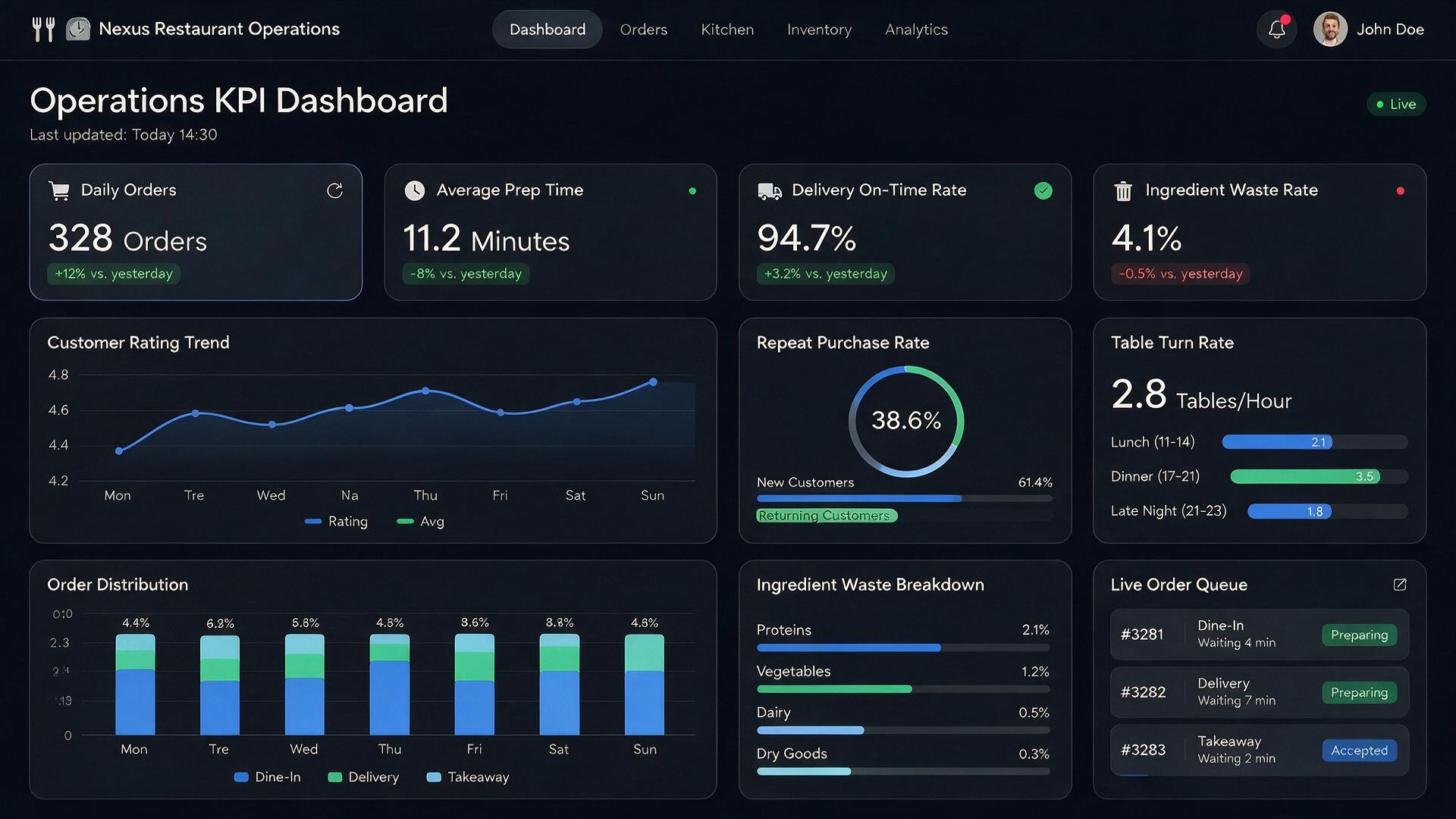
Typical outcomes
- Fewer stockouts and lower spoilage
- Consistent quality and fewer negative reviews
- Higher on-time delivery and lower refund/dispute cost
- Labor that matches demand — no peak collapse, no off-peak waste
- A clear margin view: gross profit, waste, labor, efficiency and review reasons at a glance
- Higher repeat purchase through structured membership operations
Start with the loop that hurts most
You don't have to change everything at once. GT6-AI deploys in phases, starting from the link with the highest risk — usually prep and inventory, then delivery, then reputation and growth. Each phase is a working, measurable improvement.
Contact GT6-AI to map your store's current loop and get a phased implementation plan.